

Horror, no matter the sub-genre, is always about survival. Of the body, the mind. The heart, the soul. The status quo. The future. While horror isn’t the sole province of American Indians—horror’s for everyone—it does track that the many sovereign nations here in North America that survived an attempted genocide, a violent displacement, and a continuing erasure might find resonances in this genre that best dramatizes the survival we’ve been actively engaged in since about 1492.
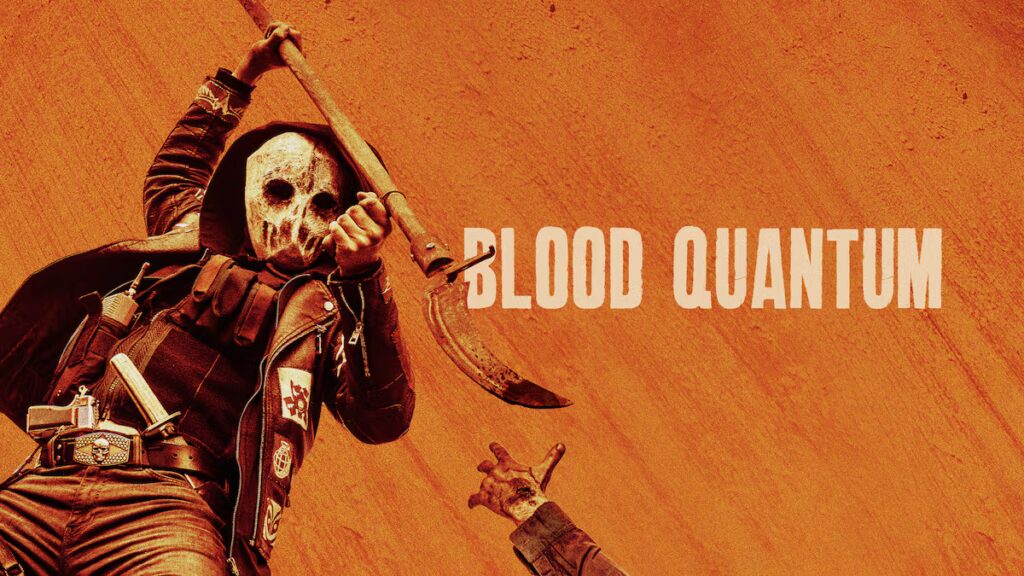
And, if you can accept that horror’s often a cautionary tale, then you also accept that it can provide guidance, right? About how to live more compassionately, sure, that’s always the goal, but, the stakes in horror being what they are, it can also instruct us how not to die. This is very interesting to a people who are supposed to have been dead for a couple centuries already. This is very interesting to a people who, as Nector Kashpaw says in Louise Erdrich’s Love Medicine, are best seen “falling dead off the back of a horse.” The way we compulsively soak in every survival story we can, what we’re getting from each telling is another piece of a larger puzzle. And maybe we can even fit those pieces together well enough that we make it through to tomorrow, and the day after that, too.
Another thing horror can provide is hope. Watching others struggle against insurmountable forces and make it through to the other side is fun and cathartic, but the premise allowing that dynamic to process through to its conclusion is that there is an other side up there somewhere, at the end of all this.
American Indians, we’re in that exact same struggle against seemingly insurmountable forces. We’re still waiting for this occupation to end. We’re still waiting for this all to be a bad, bloody dream. We’re waiting for that light at the end of this centuries-long tunnel. We need that hope.
Until that day, though, we wait, and we scowl, and we laugh a lot more than you might think.
And a lot of us watch, read, and play horror, most of it in these varieties:
- POST–APOCALYPTIC HORROR: The apocalypse happened for each of our nations at different times, but the thing we all share is that that contact happened, and it ruptured the world in a vital way, and now things will never be the same again. This world we’re in right now, for us, it is the post–apocalypse, where life is hand-to-mouth, tooth-and-claw, and there’s monsters around every corner. Just, their teeth and their claws, they’re on the inside.
- POSSESSION HORROR: Hm, wonder if we have any idea what it’s like for a malevolent entity to shrike into us and take up residence, puppet our arms, spin our head around on our shoulders? The shades of difference between possession and colonization, they’re . . . minimal. One applies to an individual, the other to a people. Aside from that, they’re pretty much the same terrifying prospect.
- WEREWOLF HORROR: Werewolves spend a lot of their time as humans, just doing normal, unthreatening things, but every once in a while they’re ravenous and dangerous and sick with their own bloodlust. Sort of like how nice and trustworthy someone can be in the shade of a treaty tent, as opposed to how that same general or dignitary or representative can be a day or two later, when there’s gold in those hills they just promised you for as long as the grass grows and the water flows?
- VAMPIRE HORROR: A pale monster that latches on, sucks your life out? Yeah, we maybe know a thing or two about that, thanks. As does the land we still claim, which turned out to have resources under it, or other resources wanting to cross it. What we watch these stories so closely for, though, it’s the daylight and garlic and crosses that dispatch the vampire. If we watch closely enough, we might figure out what the analogies to those are in our world.
- ZOMBIE HORROR: A horde of dead boiling up on the horizon to raze the land like locusts? This isn’t exactly unfamiliar to us. Of specific note is that the one characteristic all zombies share is that they can’t be negotiated with. Neither can pilgrims and colonists and settlers and corporations and governments, be it 1622 or 2024.
- HAUNTED HOUSE HORROR: These stories are typified by a place having a bad enough history that the place becomes that badness, punishing everyone who tries to take up residence there. In our case, that bad place is the place we still call home. Any step you take on these two continents, look back at that footprint you’ve left. Doesn’t take long for blood to seep up through the treads, does it? That’s our blood. That’s us. This whole place is haunted. Bad history is what America’s made of.
- INFECTION HORROR: Though these have become stories about poor policy management, overpopulation, and the heedlessness of progress, they’re fundamentally about the cataclysmic impact of a single infected blanket being passed from one group to another, and how fast things can fall apart after that. It’s a story we know well, and it’s always complicated by the fact that winter’s looming, and . . . we do sort of need a warm blanket.
- SLASHER HORROR: Slashers are justice fantasies. A wronged party has been treated so poorly that they’re granted strength or power or deviousness to get revenge, balance the scales with many pounds of flesh. American Indians dream of this. It’s the single most compelling story. To give back what’s been visited upon us, and maybe with interest? Sign me up, twice. Sign all of us up.
- GHOST HORROR: We don’t want to have to watch these stories, but they’re trotted past so constantly, it’s hard not to look. I’m talking about our image silk-screened onto t-shirts, our names bolted onto cars and trucks, helicopters and missiles, our language snatched from us and used for purposes we never authorized. These are ghosts. And, in America, they don’t even wait for nightfall to come out.
- ALIEN INVASION HORROR: Luckily, we’ve already been inoculated to stories of ships crossing dark, uncrossable oceans with unseen technology, virulent blood, and slave shackles to lay claim to what isn’t theirs. Really, these stories of dangerous extraterrestrials touching down on the White House lawn, they’re comedies to us, in that the guilty parties are getting their long-delayed comeuppance. And, who knows, maybe these visitors from the far reaches of space like fry bread, right? They can’t be worse than the visitors we’re already dealing with, can they?
So, when you see us all reading this bloody book, watching that scary film, playing that horror game compulsively, remember that what we’re doing, here, it’s surviving. The media you and yours choose to consume, it’s nearly always either what best embodies your fears and struggles, or the direct opposite of that, so you can pretend those fears and struggles don’t exist. Over the generations, over the centuries of occupation and displacement, reduction and commodification, we’ve learned that you can’t ignore a bad thing away, though. We choose instead to face it, to know it, to watch it. To wait it out. Ideally with a vampire or werewolf story in our lap, or with jump-scares flickering on screen, or with our fingers on the buttons of our own virtual Gatling guns, to mow zombies down in this continuing post–apocalypse.
Horror’s not Native, no, but it’s native to us.
Wow, very thought-provoking and I never thought of horror as an escape. Would be a very interesting project for you to talk with a fellow professor there at CU Benjamin Teitelbaum he specifically writes about traditionalism and how it’s working its way into our political scene again. very far right thoughts being pushed on us, do we do just sit there or fight back?